Monthly Rent, Management Fees, and Labor Costs: How Card Payments Are Changing the Way Koreans Handle Fixed Expenses
For many households and small business owners in Korea, fixed monthly expenses like rent, building management fees, and staff wages have traditionally been paid in cash or through bank transfers. That system worked for decades, but it came with a real downside: cash flow pressure at the end of every month. Today, a growing number of people are turning to card-based payment services that let them settle these recurring costs with a credit or debit card, spreading the financial burden more evenly and gaining access to card rewards along the way.
Why Fixed Monthly Payments Are Difficult to Manage with Cash Alone
Rent, management fees, and labor costs tend to hit at the same time each month. For a small business owner, paying employee wages, part-time staff fees, and service contractor costs all within a narrow window can create a serious liquidity crunch. Even for individuals renting an apartment, the combination of monthly rent and building management fees can strain a budget that has not yet received its next paycheck. The core problem is timing: the obligation arrives before the money does.
Bank transfers solve the mechanics of payment but do nothing to solve the timing problem. Credit cards, on the other hand, introduce a settlement delay that gives the payer anywhere from a few weeks to over a month of breathing room. That gap, small as it sounds, can be the difference between a smooth month and a stressful scramble for funds.
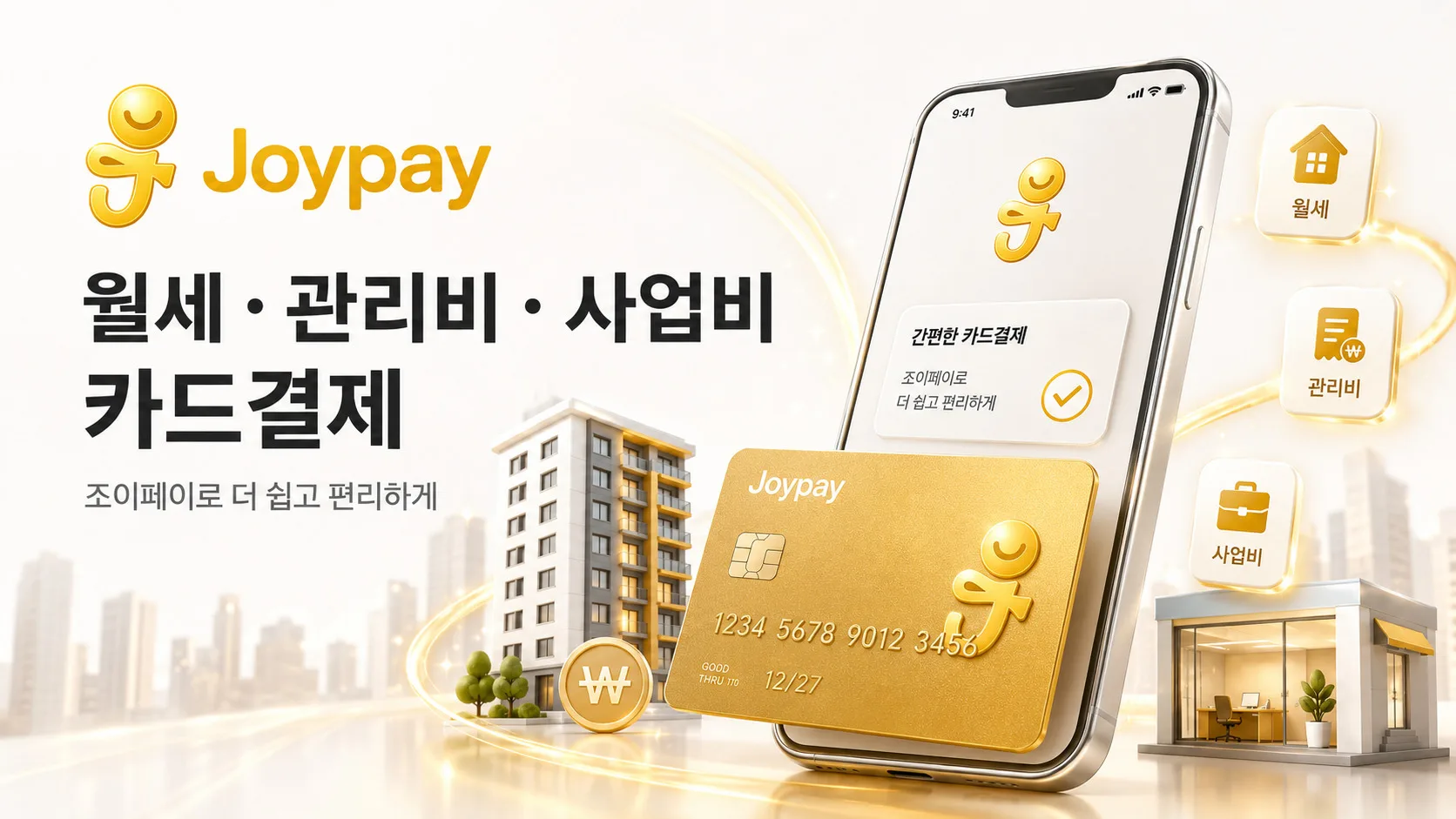
Understanding the Three Main Services
Monthly Rent Card Payment
Most landlords in Korea still expect rent to arrive as a direct bank transfer on a fixed date. They have no card terminal, no point-of-sale system, and no interest in setting one up. Rent card payment services act as an intermediary: the tenant pays the service provider by card, and the service provider forwards the equivalent cash amount to the landlord’s account. The landlord receives exactly what they expect, and the tenant gets the flexibility and rewards of a card transaction. It is a clean solution that requires no cooperation from the landlord at all.
Management Fee Card Payment
Building management fees for apartments and officetel units are billed monthly and cover shared costs like elevator maintenance, cleaning, and utilities for common areas. Some larger buildings have modernized their billing systems and accept card payments directly, but many smaller buildings still rely on bank transfers or cash. A 관리비카드결제 service bridges that gap, letting residents pay by card while the building management office receives its funds through the usual channel. Residents benefit from card points and installment options without the building needing to upgrade its payment infrastructure.
Labor Cost Card Payment
For business operators, paying wages and service fees in cash or via transfer means the money leaves the account immediately. Labor cost card payment services allow business owners to charge these expenses to a credit card, effectively deferring the actual cash outflow until the card’s billing cycle closes. This is especially useful for businesses that have irregular revenue timing or that are waiting on client payments before they can comfortably cover payroll.
Key Benefits at a Glance
- Cash flow relief by deferring actual payment to the card’s settlement date
- Accumulation of card reward points or mileage on expenses that previously earned nothing
- Option to split large payments into installments, reducing single-month pressure
- Simplified record-keeping through card statements instead of manual transfer logs
Comparing the Three Payment Types
| Payment Type | Who Benefits Most | Typical Frequency | Landlord or Recipient Involvement |
|---|---|---|---|
| Monthly Rent | Tenants in residential or commercial properties | Monthly | None required |
| Management Fee | Apartment and officetel residents | Monthly | None required |
| Labor Costs | Small business owners and sole proprietors | Monthly or per project | None required |
Things to Keep in Mind Before Using These Services
Card payment intermediary services typically charge a small processing fee, which is the trade-off for the convenience and cash flow benefit they provide. Before signing up, it is worth calculating whether the value of card rewards and the benefit of deferred payment outweigh that fee in your specific situation. For many users, particularly those with high monthly rent or significant labor costs, the math works clearly in their favor. For others with lower fixed expenses, the fee may need closer scrutiny.
It is also worth confirming which cards are accepted by the service provider and whether installment payment options are available for your card type. Most reputable services support a wide range of domestic credit cards, and some also accept debit cards for users who prefer not to carry revolving debt.
A Practical Shift in How Recurring Costs Are Handled
The idea of paying rent or wages by credit card might have seemed unusual just a few years ago, but the underlying logic is sound. These are large, predictable, recurring expenses that have historically been locked into a rigid cash-based system. Card payment services unlock flexibility without requiring any change in behavior from landlords, building managers, or employees. The payer simply gains more control over timing, earns rewards on spending they were going to do anyway, and reduces the stress that comes with month-end cash crunches. As more people discover these services, they are becoming a standard part of personal and small business financial planning in Korea.
